
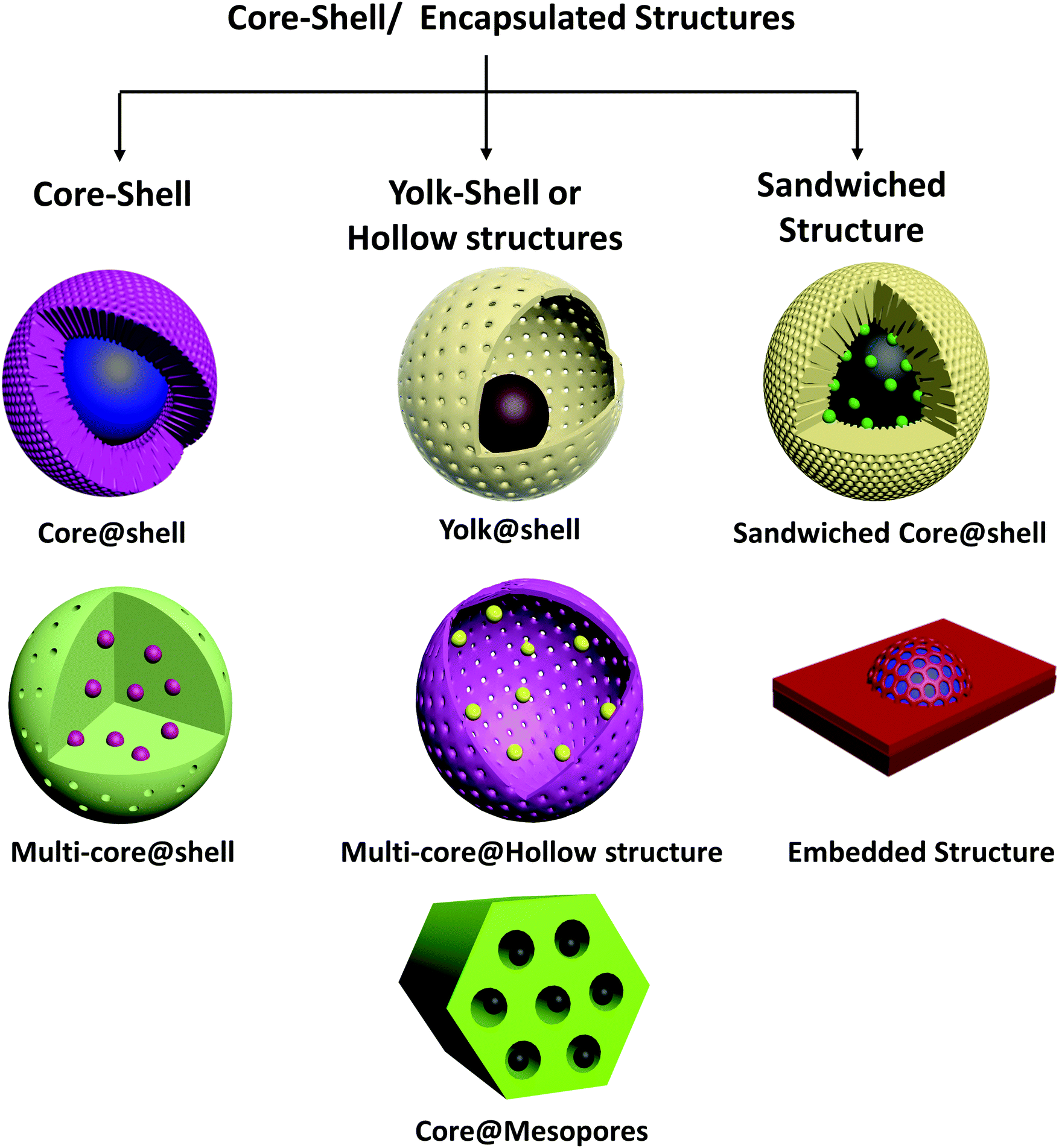
The Green Globes® for Core & Shell (C&S) protocol is a user-friendly web application that aids architects, tenants, construction professionals, and owners in evaluating, quantifying, and improving the sustainability of projects limited to the core and shell of a building. Core-shell nanostructure as the name suggests consists of a core encapsulated by a shell. The core and shell are two different material. The shell may impart protection to the core for oxidation or any other harsh environment. It can also help in improving the property of the core. Coreshell Technologies, Inc. Coreshell Technologies is accelerating the world’s transition to electric transportation and renewable energy by solving the key degradation issue in rechargeable batteries. Our breakthrough nanolayer thin-film coating technology protects batteries from degrading chemical reactions and is uniquely capable of.
Explore for 7 days free, then $9.99/mo.

Speed up Mac | CleanMyMac X
A macOS cleaner and performance booster in one app. Get more done with a faster Mac.
Go beyond screenshots | CleanShot X
Learn how to capture videos, GIFs, scrollable content, and old good screenshots on the fly.
Join every meeting in a click | Meeter
Zoom or Google Meet, it doesn’t matter. Manage all your calls in one place.
Meantime, prepare for all the awesome things you can do with Setapp.
Read onSign Up

HPLC, UHPLC
Related stories
Chromatography Investigates the Role of Terroir in Whisky
How is Chromatography Beefing Up to Stay on Top of Doping?
Predicting How Viruses Affect Bees - Chromatography Explores
Does Cannabis Use Affect Breast Milk? - Chromatography Explores
Jul 07 2014Read 5309 Times
Today, the vast majority of chromatographers seek to lower costs and increase productivity simultaneously. While this may sound tricky, core-shell technologies provide a low-pressure, high efficiency solution to this particular problem. Used in conjunction with high mobile phase flow rates, core-shell particles can reduce the amount of analysis time without impacting upon rates of separation efficiency or generating extreme back-pressures. Instead of investing in a costly UHPLC system, many labs are choosing to improve the efficiency of their existing HPLC system, increasing efficiency and reducing expenses in one fell swoop.
Core-shell particles and high separation efficiency
Core-shell particles’ high separation efficiency is largely due to more rapid analyte mass transfer – from the mobile phase through to the stationary phase and back again. This is because diffusion only occurs via the porous, outer layer of the particle rather than the entire particle. (In order to increase efficiency it’s important to minimise sources of band broadening, such as diffusion). In terms of size and shape, core-shell particles are remarkably constant, which also helps to enhance separation efficiency by limiting variable analyte movement between the particles.
The difference between core-shell technologies and UHPLC systems
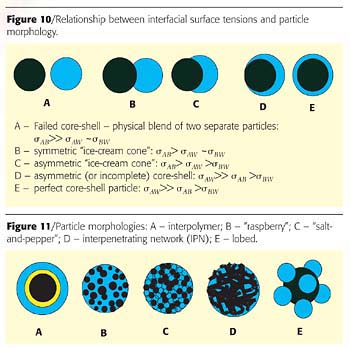
Core Shell Polymerization Technology
Prohibitively costly UHPLC systems are created in accordance with sub-2 particle, high pressure applications. Unfortunately, sub-2 particle ready equipment, which provides high speed, high efficiency analysis, generally generates pressures which exceed the standard limits of HPLC equipment. Yet a great deal of research and investigation has demonstrated that existing HPLC systems can be improved simply and cost-effectively with the addition of core-shell columns. In addition to this, reducing system dwell volume and increasing detector scan rates are simple tasks which require minimal extra outlay. This article, Using Core-Shell UHPLC Columns for Improved Separation and Characterisation of Immunoglobulins and Other Large Intact Proteins, discusses some of the ways in which core-shell columns can be used in more detail.
How are core shell particles formed?
Core Shell Technologies Stock
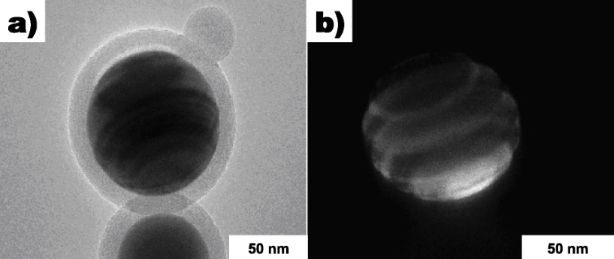
In order to create a core-shell particle, sol-gel processing techniques are employed initially. These sol-gel processing techniques incorporate nano-structuring technology, resulting in the growth of a homogenous porous shell, which envelops a compact, non-porous silica core. Core shell particles are less porous than fully porous particles, which leads to lower levels of band broadening and increased rates of efficiency.
Core Shell Polymer
For more information, please read UHPCL or Core-Shell, Which is the Winner? This article discusses the relative advantages and disadvantages of core-shell technologies and UHPLC systems further.